
I asked ChatGPT to create an image showing how we combine and use AI as of the end of October 2026.
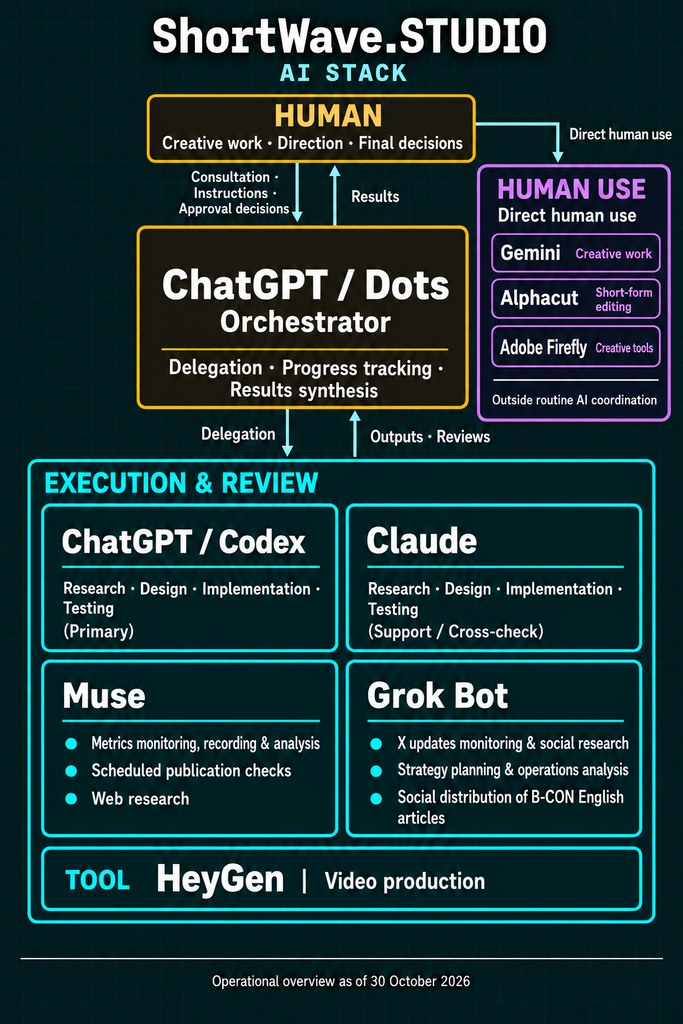
The idea is that a human sits at the centre of the creative process, with ChatGPT’s Dots acting as the orchestrator, assigning work to the different AIs.
Each AI has its own quirks, so the idea is to use those differences to tackle tasks from multiple perspectives.
I tend to use ChatGPT/Codex most, simply because they suit me and the tasks I give them, and offer generous usage allowances. But Claude’s cross-checks and reviews are dependable when tackling complex tasks, and give me more confidence in the output.
Muse and Grok/Grok Bot are recent additions, but they’ve proved very useful for researching social media and online articles, analysing what they find, and developing ideas from it.
Of course, ChatGPT and Claude can do those things too, but being able to deliver something usable quickly is a real strength.
For creative work, though, I get better results when I use the tools directly. That’s how it works for me, anyway. Gemini, Firefly and Alphacut fall into that category.
There’s often a lot of trial and error involved, and judging what works and what doesn’t tends to come down to the human. I’ve made HeyGen available as a Codex Skill, so I do use it through AI, but there isn’t much benefit to having an AI in the middle.
Online, I often come across claims like “This is the best AI!” or “Using that AI is already outdated”, but every AI has its strengths and weaknesses.
Ultimately, they can all achieve broadly similar things, so I think the most sensible approach is to choose based on how well they suit you and the tasks you want to give them…
Comments (0)